What Are Call Centers?

Call centers have become a core part of how modern businesses manage their relationship with customers. As call volumes grow and customer needs become more diverse, relying on traditional communication methods is no longer enough to keep up — which is exactly why businesses turn to call centers to organize communication, route customers efficiently, and track team performance. But what exactly is a call center, how do modern call centers work, and what's the difference between a traditional system and a cloud-based one? This article breaks down everything businesses need to know.
What Is a Call Center?
A call center is a dedicated system businesses use to manage incoming and outgoing calls with customers — whether for support, sales, customer service, or tracking requests and inquiries. It doesn't rely on large teams manually answering every call; instead, it uses technology to handle calls efficiently, including automated responses, call routing, performance monitoring, and reporting.
In short, a call center system is a complete communication framework, not just a way to make and receive calls.
How Do Modern Call Centers Work?
The process is simpler than it sounds. When a customer calls, the system handles the call based on pre-set rules — playing a welcome message, using an IVR (Interactive Voice Response) system to identify what the caller needs, then routing the call to the right agent or department. Calls can also be recorded, logged, and turned into detailed reports . This structure keeps call management organized and makes it far easier to track results and performance over time.
Types of Call Centers
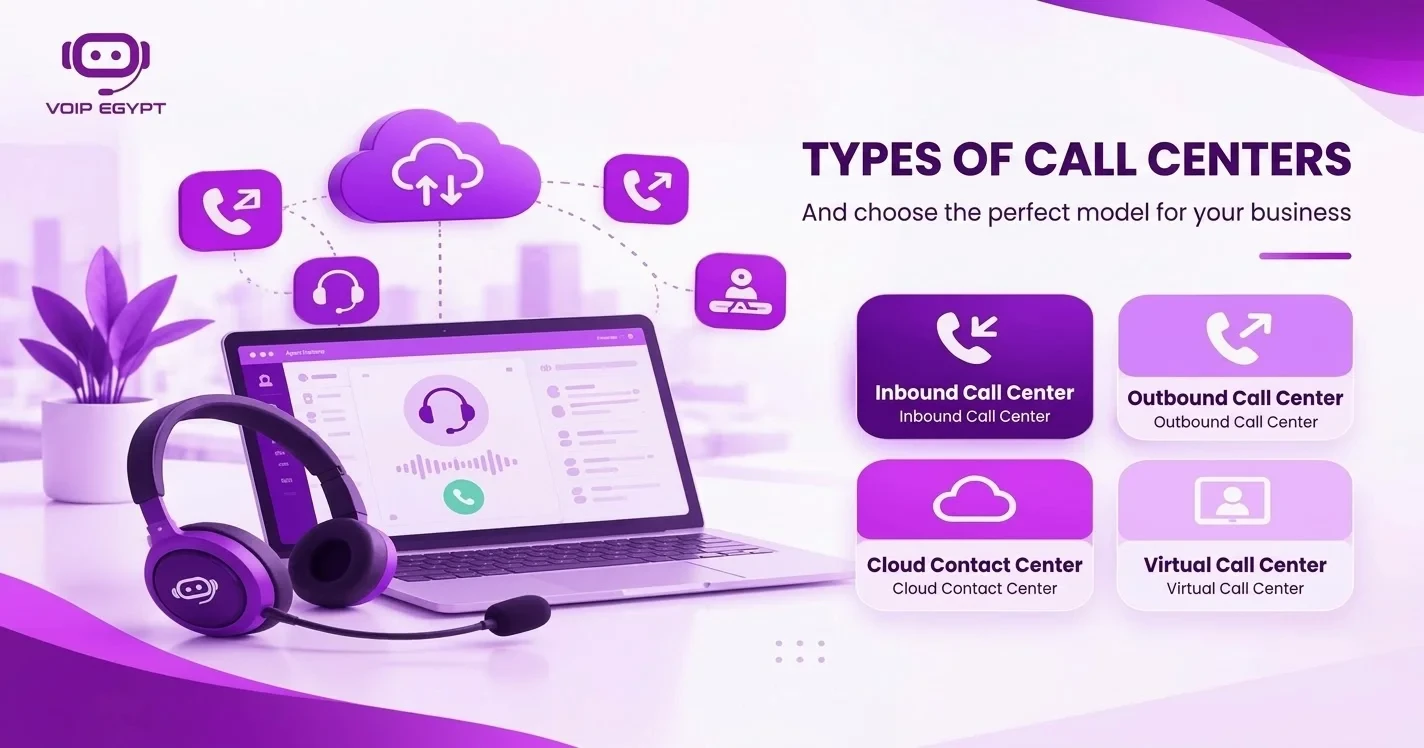
Call centers vary depending on how a business uses them. The main types include:
Inbound Call Centers :
Focused on receiving customer calls — handling inquiries, complaints, and order follow-ups.
Outbound Call Centers :
Used mainly for sales, follow-ups, and surveys, since they rely on the team initiating calls to customers or prospects.
Hybrid Call Centers :
A mix of inbound and outbound, ideal for businesses that manage both sales and customer service through a single team and system.
Traditional vs. Cloud Call Centers: What's the Difference?
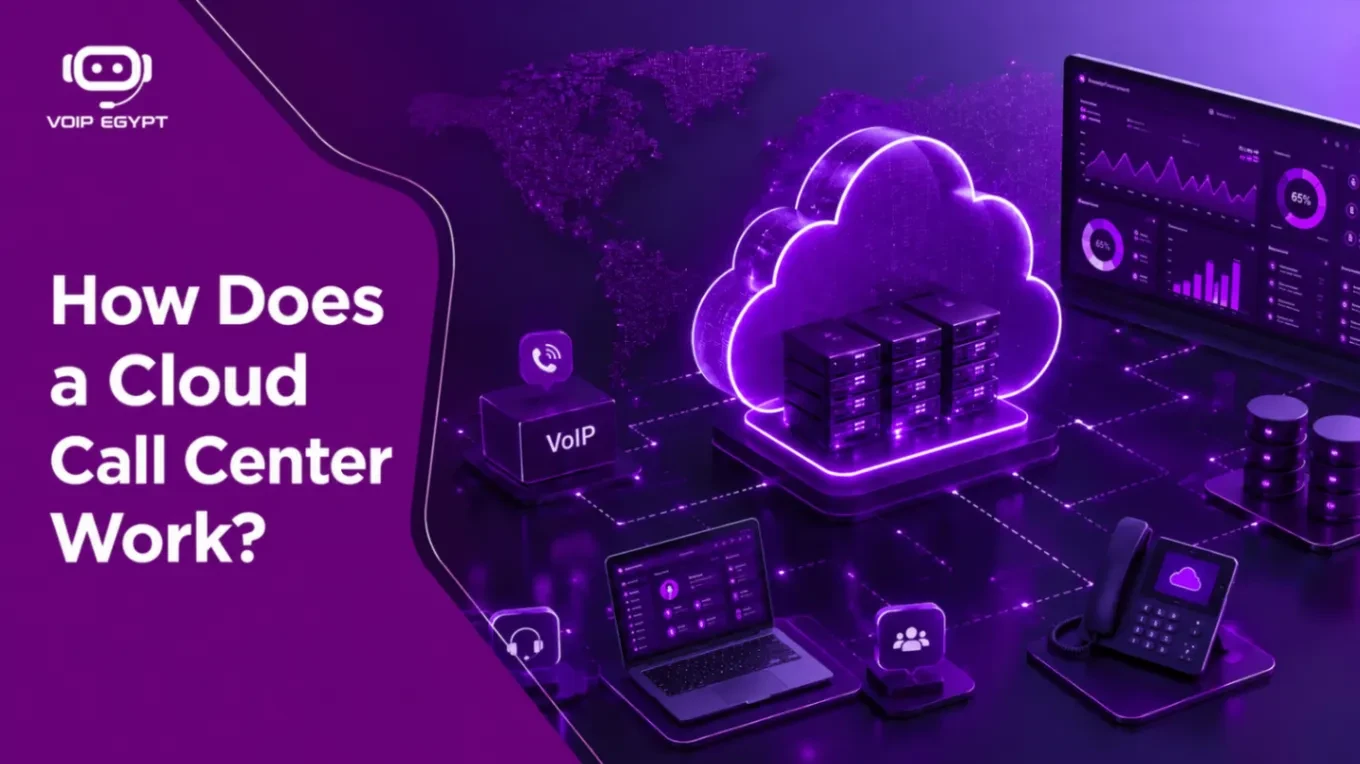
There are major differences between traditional and cloud call centers. A traditional call center depends on physical infrastructure, on-site hardware, and staff working from a fixed location. A cloud call center works entirely differently — it runs on internet-based communication technology.
Key differences include:
- Infrastructure: Traditional systems require significant on-site equipment and office space; cloud systems only need an internet connection.
- Scalability: Cloud solutions make it far easier to add users and branches as the business grows.
- Remote work: Cloud call centers let agents work from anywhere, without being tied to a physical office.
- Management: Cloud systems can be managed centrally, without needing on-premise infrastructure.
- Integrations: Modern cloud systems typically integrate more easily with CRM and other business tools.
The right choice ultimately depends on company size, business needs, growth plans, and the number of agents involved.
The Role of AI in Modern Call Centers
Today's call centers go far beyond simple automated routing. AI has become a core part of the next generation of call center systems. AI-powered tools can analyze a caller's tone in real time to gauge sentiment, and automatically route calls to the most suitable agent based on the nature of the inquiry and the customer's history — instead of relying on generic, one-size-fits-all routing.
AI-driven chatbots and voice bots also handle repetitive, common queries without human intervention, cutting wait times and freeing up agents to focus on more complex conversations. On top of that, smart analytics tools generate instant call summaries and performance recommendations based on real data, not manual guesswork.
This is exactly the direction VoIP Egypt is building toward — integrating AI into call routing and analytics to help businesses deliver faster, more accurate customer service.
Key Benefits of Call Centers for Businesses
Call center systems give businesses a wide range of advantages that improve efficiency and customer communication, including:
- Organized call routing — every call reaches the right department or agent.
- Faster response times — less time for customers to reach the service they need.
- Call recording — useful for quality tracking, evaluation, and team training.
- Performance monitoring — clear data to help management track team output.
- Reporting and analytics — better visibility into call volume and peak times.
- Easy scalability — add new users and departments as the business grows, without hassle.
- CRM integration — connect call data with customer data for a more organized service experience.
How Call Centers Improve Customer Service
Great customer service isn't just about answering quickly — it's about managing the entire customer journey. Call center systems route customers to the right department fast, give agents full context when they need it, and allow calls to be recorded and reviewed for consistency. On the management side, they provide clear reporting on performance, recurring issues, and peak-load times, making it easier to keep improving service over time.
Frequently Asked Questions
What is a call center?
A call center is a system businesses use to manage incoming and outgoing customer calls efficiently, covering everything from support and sales to service tracking and reporting.
Is a call center the same as a customer service center?
Not quite. A customer service center focuses solely on support and resolving customer issues, while a call center is broader — it also covers sales, telemarketing, and order follow-ups, with customer service typically being just one part of it.
Do small businesses need a call center?
Yes, especially with cloud-based solutions that don't require heavy infrastructure investment. They let small businesses manage calls professionally without the cost of a full traditional call center setup.
What's the difference between a call center and a VoIP system?
VoIP is the underlying technology that enables calls over the internet, while a call center is the complete system that uses VoIP (and other tools) to manage and organize customer communication.
Can a call center integrate with our existing CRM?
Yes. Modern call center systems are built to integrate with existing CRM and ERP platforms, making data transfer smooth without needing to replace the tools you already use.
Get Started with Smart Call Center Solutions from VoIP Egypt
If your business handles a large volume of customers and calls, you need a way to keep your customer service and sales organized. With VoIP Egypt, you can choose the call center system that fits your business and manage your communication more efficiently.
Get in touch with VoIP Egypt and discover the communication and call center solutions built to help you manage calls and track your team's performance.
Message us on WhatsApp for any questions, and see how you can level up the way you connect with your customers.